
She looks at the joint, not just the teeth.
Clicking, grinding, morning soreness — looked at properly, and explained to you in plain terms.
Dr. Khan examines how the jaw joint moves and where it catches — opening, closing, and side to side — along with the muscles of the jaw, temples, and neck that compensate when the joint is working harder than it should.
She also looks at how the teeth meet, because a bite that distributes force unevenly can keep the joint and muscles under strain. It can also accelerate tooth wear and compromise the bone and gums surrounding the teeth and roots. What she finds is explained to you in plain language before anything is recommended.
What an evaluation involves
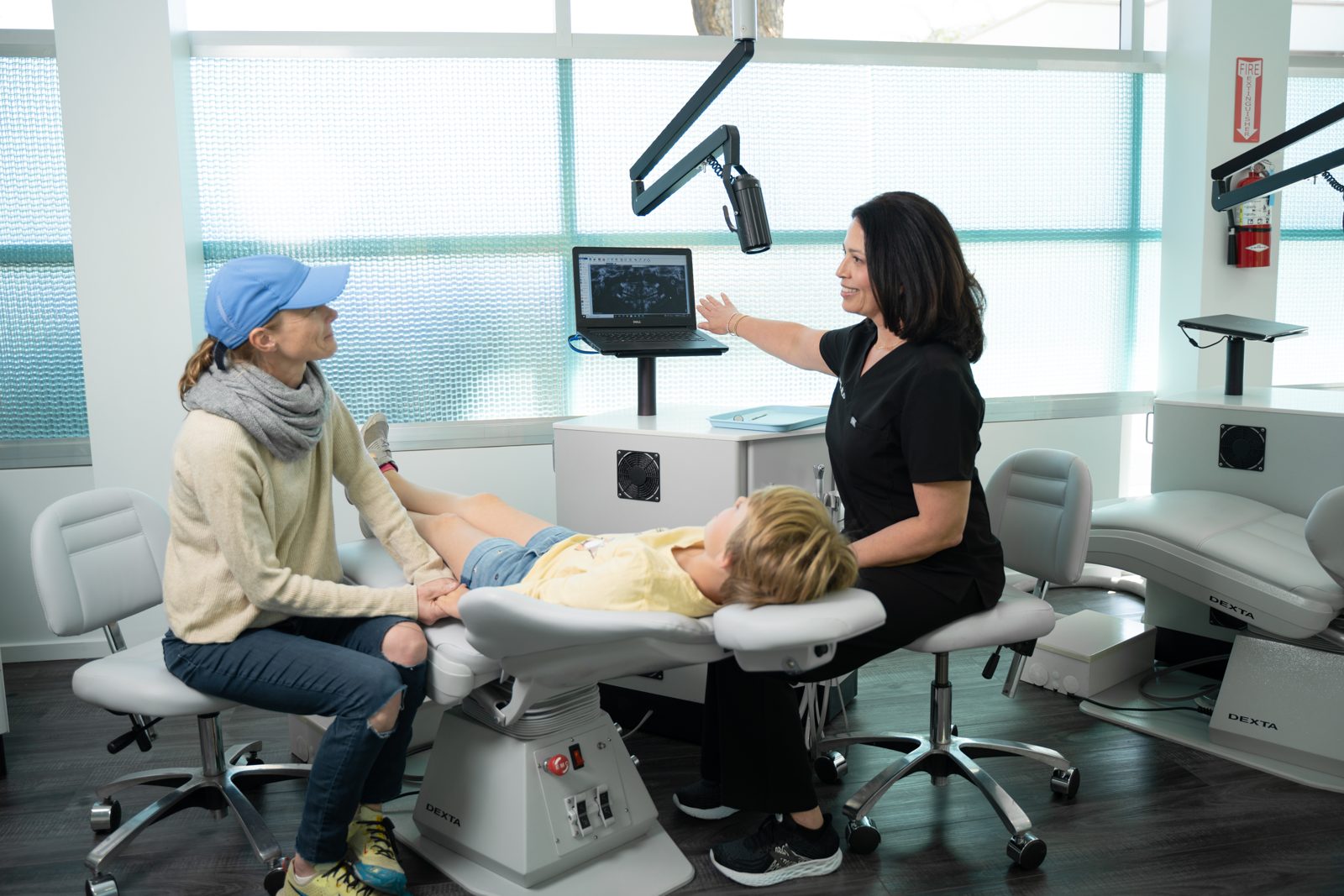
A jaw evaluation is a conversation first: when the pain started, what makes it worse, whether it wakes you, and what you have already tried.
From there she examines the joint and muscles by hand, checks the bite, and takes the imaging she needs to see the structure clearly. You leave understanding what is going on and what the options are — including the option to do nothing yet.
Grinding, clenching, and night guards
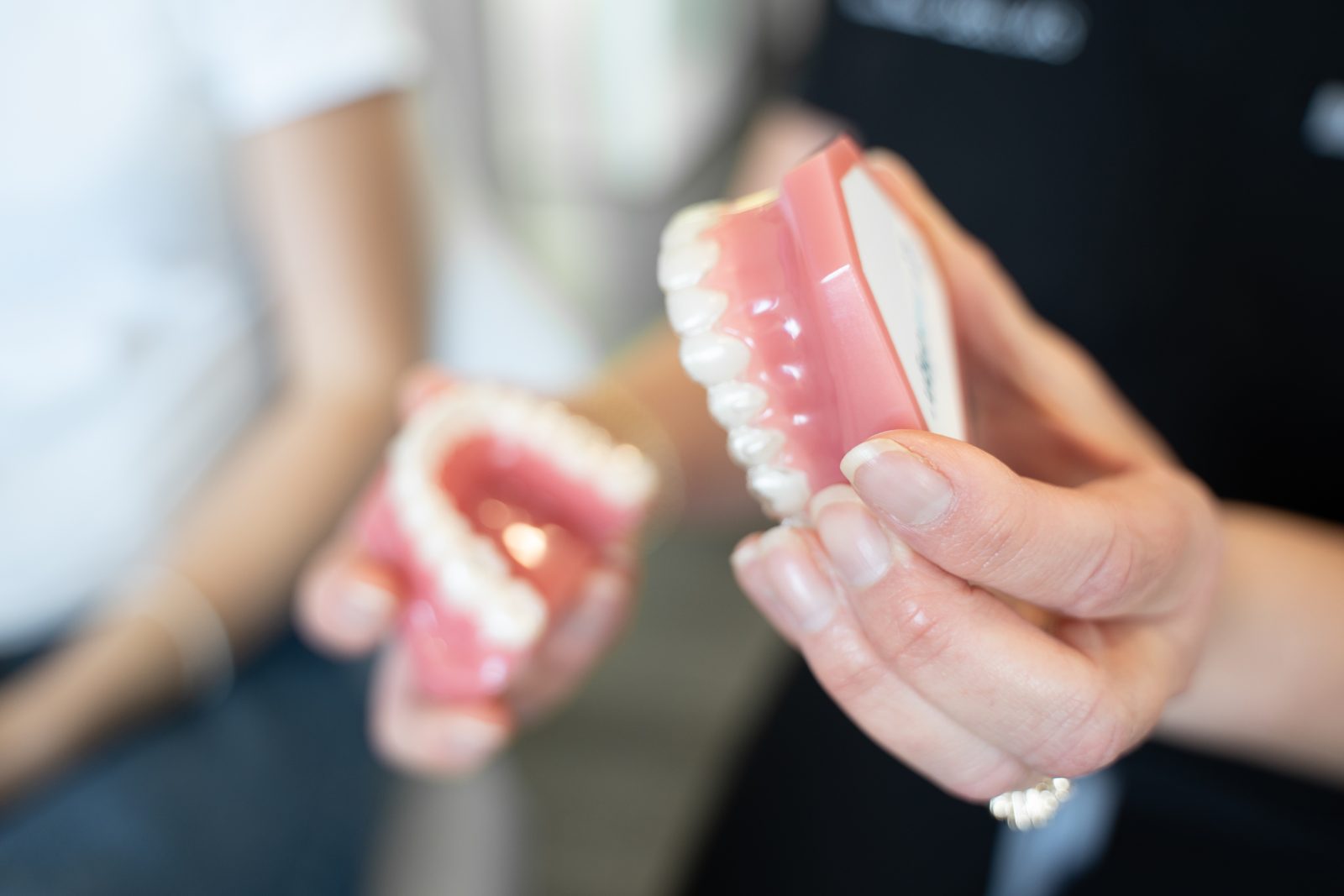
Many people grind or clench without knowing it, and often notice the effects first: worn edges, morning tightness, sore muscles, and headaches.
A night guard is one tool among several. Dr. Khan fits guards to the individual bite rather than dispensing a standard tray, and will tell you when a guard alone is not addressing the underlying cause.
What it costs
Jaw care here is largely cash-pay, and some of it may be billable to dental or medical insurance. The cost page lays out every option, and you leave your consult with a written number.
Common questions
Real questions, answered in Dr. Khan's own words, on Ask Dr. Khan.